We Failed at Gamification in L&D, and We’re Doing It Again With AI
By Mark Diaz |
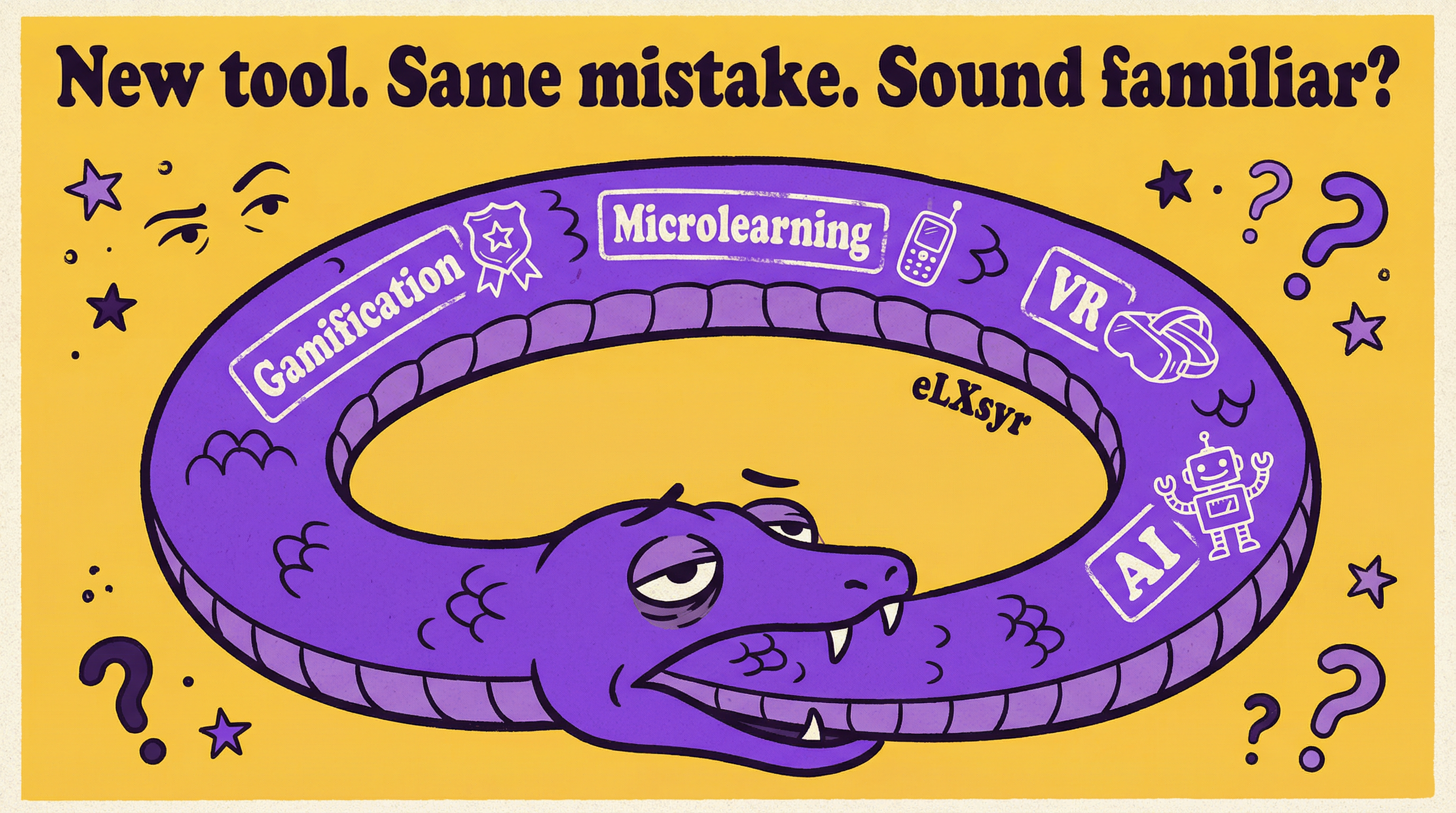
I’ve been researching on how L&D teams are using AI for the app I am creating, and I kept running into a lot of naysayers. L&D professionals who gave up on AI because they feel like they just kept getting slop.
At first, I assumed it was the usual resistance to change. But the more I read, the more it started to feel familiar. Not because AI is terrible, but because of how we’re adopting it.
It reminded me of what happened with gamification.
Gamification didn’t fail. We just failed to do it right.
Gamification works. We have enough proof of that in marketing, product design, and consumer tech. The problem is how L&D usually implemented it.
In learning, “gamification” often looked like:
- Points, badges, and leaderboards used as trophies not signals. If it’s just an LMS sticker with no real meaning, it changes nothing.
- “Make it fun” treated as the main goal, instead of making practice feel meaningful and tied to real work.
- Success measured by completions and post-course surveys, instead of measurable behavior change on the job (speed, quality, fewer errors, better decisions).
That approach can drive short-term engagement, but it rarely changes behavior at work. Learners quickly figure out what matters and what doesn’t. And when rewards aren’t tied to meaningful actions, gamification becomes background noise.
Why marketing did it successfully (and L&D didn’t)
Marketing and product teams don’t treat gamification like decoration. They treat it like behavior design.
They usually have:
- one clear behavior they want more of
- a tight loop: trigger → action → feedback → reward
- constant measurement, testing, and iteration
- accountability to real metrics like retention, conversion, and revenue
In other words, the system is designed to change behavior, and the results show up quickly.
L&D rarely gets that same setup. The feedback loop is slower, the metrics can be vague, and “done” often means the course has been launched. That makes it harder to iterate, and it pushes teams toward what’s easiest to ship: content.
AI is starting to follow the same pattern
This is the part that worries me. A lot of what I’m seeing in L&D right now is AI used primarily for speed:
- faster slide creation
- faster scripts and storyboards
- faster quiz writing
- faster course builds
That’s helpful. But it’s also output-first. And if the learning system is weak, AI just helps us produce more of the same, faster.
That’s why the naysayers might be louder than usual. They’re not reacting to AI as a technology. They’re reacting to AI as “another trend” that gets bolted onto training without improving performance.
The real opportunity: use AI the way marketing uses gamification
If we want AI to matter in L&D, it can’t just be a content engine. It needs to be part of a performance system. The most promising uses of AI in learning look like this:
- coaching and feedback in the flow of work
- practice that adapts based on real mistakes, not just quiz scores
- manager support: better coaching prompts, reinforcement tools, observation guides
- insights from real work artifacts (calls, chats, tickets, writing) to target actual gaps
- metrics tied to behavior and outcomes, not just completion
This is the difference between “training people” and “improving performance.”
The question we should be asking
Instead of “How can AI help us build training faster?” I think the better question is:
“How can AI help people get better at their job, right when it matters?”
Because that’s the version of AI that will earn trust. Everything else is just faster production.